

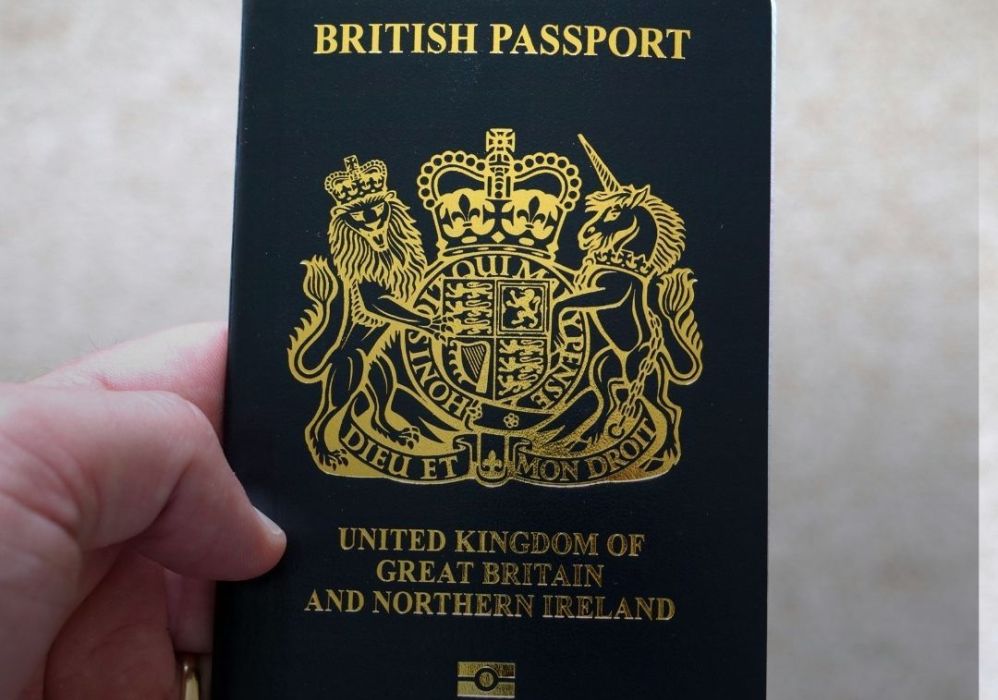
UK Dual Citizenship & Passports in 2026: What's Changed and What NZ Travellers Need to Do Now
Are You a Dual British-New Zealand Citizen? Here's What the UK's New Border Rules Mean for Your Travel
If you're a New Zealander who also holds a UK or Irish passport, or you're eligible for British citizenship — you're not alone. We're seeing more travellers asking how dual citizenship affects their travel, especially when planning trips involving the UK and Europe.
The UK's border system changed permanently on 25 February 2026. How you travel now matters just as much as where you're going. The good news is this is very manageable — as long as it's factored into your plans before you book.
Here's a clear, practical overview of what has changed and what to think about before you travel.
What Changed for UK Dual Citizens from 25 February 2026
The UK completed its move to a fully digital border system on 25 February 2026, with the Electronic Travel Authorisation (ETA) framework now in full enforcement.
As part of this, dual British citizens must enter and exit the UK using either:
- A valid UK passport, or
- A Certificate of Entitlement (CoE) linked to their non-UK passport
A non-UK passport alone is no longer accepted for UK entry, even if you are a British citizen. Airlines and other carriers are now legally required to check passengers' documentation before they board — if you can't prove your status, you risk being denied boarding.
This affects anyone holding dual British-New Zealand citizenship, as New Zealand is among the countries whose nationals now require an ETA to visit the UK — meaning British-NZ dual nationals cannot fall back on their NZ passport as proof of entry eligibility.
Official guidance is available from:
- New Zealand SafeTravel (safetravel.govt.nz)
- GOV.UK: Electronic travel authorisation (ETA): guide for dual citizens
Which Passport Do You Use and When?
Most dual nationals will effectively use a two-passport system:
- Entering the UK: Use your UK/Irish passport (or CoE)
- Leaving the UK: Use your UK/Irish passport
- Travelling to other countries: Use your NZ, EU, or other nationality passport
It's common to carry both passports on the same trip and present them at different points, particularly during check-in or at border control.
British Passport vs. Certificate of Entitlement: What's the Difference?
For most people, renewing or applying for a British passport is by far the simpler and cheaper option.
A Certificate of Entitlement (CoE) is proof of your right of abode in the UK, intended for British citizens who don't hold — or cannot obtain — a British passport. It is important to understand:
- The CoE costs £589 to apply for, compared to approximately £94.50 for a standard adult British passport renewed online (fees increase to £102 online and £116.50 from overseas from 8 April 2026)
- The application fee is non-refundable, even if the application is refused
- You cannot hold a CoE and a valid British passport at the same time — the CoE is only available to those who do not hold a valid British passport
- From 26 February 2026, CoEs are issued digitally and linked to your passport via a UKVI account. Once issued, you don't need to reapply when your passport expires — you simply update your passport details in your UKVI account for free
If you have previously held a British passport, or are eligible for one, applying for or renewing that passport is almost always the right choice. If you have never held one, or are ineligible, the CoE is the alternative route.
A Note on Those Who Have Never Held a British Passport
The rules affect some people more than others. If you are a New Zealander with British heritage — a parent or grandparent born in the UK, for example — you may be a British citizen without ever having held a British passport. Children born overseas to British parents are another common example.
If this applies to you or a family member, it's worth checking citizenship eligibility and, if confirmed, applying for a British passport before your next trip.
Is There Any Temporary Flexibility?
The Home Office issued short-term guidance to carriers allowing them — at their discretion — to accept an expired British passport (issued in 1989 or later) alongside a valid non-UK passport, provided the personal details on both match. However:
- This is not guaranteed — it is entirely at the individual carrier's discretion
- It is intended as a temporary measure only, and the duration has not been confirmed
- It does not replace the requirement to hold a valid British passport or CoE
Do not rely on this provision for planned travel. If your UK passport has expired, renew it before you fly.
Why This Matters When Planning a Trip
These rules don't just affect border control — they affect how your entire trip is structured.
We often see travellers run into issues because:
- Flights were booked under the wrong passport
- Stopovers weren't planned with passport rules in mind
- Different travellers in the same booking hold different passports
- Longer stays in Europe weren't mapped properly
None of these are problems if they're considered early — but they can be stressful and costly to untangle once flights are booked.
UK + Europe Trips: New Requirements on Both Sides
For travellers combining the UK with Europe, it's important to understand that new entry requirements now apply on the European side as well.
Europe's Entry/Exit System (EES) launched in October 2025 and reached full implementation on 10 April 2026. This replaces passport stamps with biometric registration — including facial scans and fingerprints — at Schengen area borders. All New Zealand passport holders entering the Schengen area will be subject to this, regardless of whether they also hold a UK passport.
Europe's ETIAS (European Travel Information and Authorisation System) is expected to launch in Q4 2026 (October–December). Once live, New Zealand passport holders — like those from Australia, Canada, and the US — will need to obtain ETIAS authorisation before travelling to 30 European countries. The cost is expected to be €20, valid for three years. Note that ETIAS applications are not yet open, and no exact launch date has been confirmed — keep an eye on safetravel.govt.nz for updates.
For dual British-NZ nationals travelling into Europe on their NZ passport, both EES and ETIAS will apply. EU citizens travelling on an EU passport are exempt from ETIAS, so passport choice can affect your European entry experience too.
Taken together, these changes mean that planning a UK and Europe trip now involves navigating new requirements on both sides of the Channel — and the order you visit countries, the passport you use where, and the length of your stay all need to be thought through in advance.
Long Stays, Multi-Country Travel & Extended Trips
For travellers combining the UK with Europe, or planning extended trips, passport choice can influence:
- How long you can stay in certain regions
- The order you visit countries
- Whether your itinerary needs to be structured in stages
This is especially relevant for:
- Longer holidays
- Gap-year style travel
- Visiting family across multiple countries
- Multi-generational trips
EU Settlement Scheme: A Note for Some Dual Nationals
If you hold both British citizenship and status under the EU Settlement Scheme (EUSS), the rules are slightly different. You may be able to travel to the UK using your valid foreign passport or EU/EEA national identity card, as long as your travel document is linked to your UKVI account. If this applies to you, check the current GOV.UK guidance, as this is a distinct situation from standard dual citizenship travel.
Families & Mixed Passports
Many families travel with a mix of passports — parents, adult children, or partners often hold different citizenships. Each person's documentation needs to be considered individually, while still keeping the group itinerary simple and coordinated. This is one of the most common areas where early planning saves stress.
Where a Travel Agent Adds Real Value
We're not immigration advisors — but we do plan trips around real-world entry rules every day.
At YOU Travel Napier, we help by:
- Factoring passport status into itinerary design
- Planning routes and timings that work smoothly
- Flagging potential issues early
- Shaping trips that fit both your plans and your paperwork
It's a big part of why many clients come to us for custom itineraries, rather than trying to piece everything together themselves.
Not sure whether a travel agent is right for your trip? Find out why more Kiwis are choosing to book through a travel agent.
Before You Travel: A Simple Checklist
Before you finalise flights or accommodation, it's worth confirming:
- Which passports you hold — and which one you'll use for UK entry
- That your UK/Irish passport is valid, or that a CoE is in place (remember: if eligible for a passport, this is almost always cheaper and simpler)
- If you've never held a British passport but may be entitled to one, check your eligibility now
- That flights are booked using the correct passport for each leg
- Whether your trip involves the Schengen area, and whether EES or ETIAS will apply
- Whether your trip involves multiple countries or long stays, and how passport choice affects permitted durations
- That everyone travelling is clear on which passport they'll use and when
Allow enough time not just for renewals, but for any administrative steps such as identity verification or postal submission — some travellers have faced extra costs and delays when leaving things until late. British passport renewal fees are also increasing in April 2026, so acting sooner reduces cost as well as risk.
Planning a UK or Europe Trip in 2026?
If you're travelling to the UK — especially as part of a wider European or multi-country trip — it's worth having a conversation early.
The team at YOU Travel Napier can help you plan a trip that flows smoothly, avoids surprises, and suits how you want to travel.
Get in touch to start shaping your itinerary or browse our current deals for UK and Europe travel.
Contact Us