

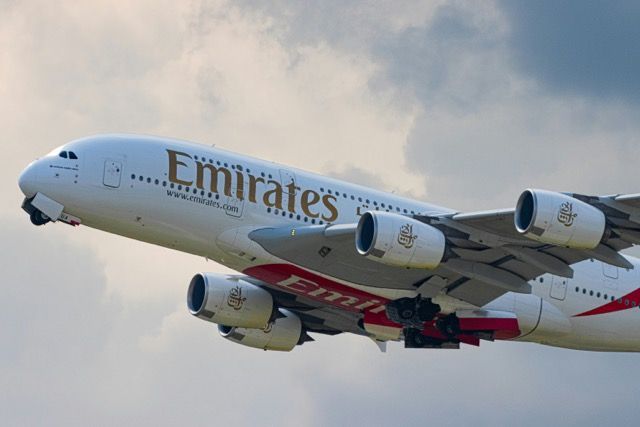
Emirates & Qatar Disruption: Your Options Explained
What the Emirates and Qatar Airways Disruption Means for Kiwi Travellers Flying to Europe
If any of that sounds familiar, this article is for you. At YOU Travel Napier, we've been fielding calls about exactly this all week — so here's our honest take on what's happening and what your options are. We're going to explain clearly what's happening, what the airlines are currently offering affected passengers, what your alternatives look like, and what we'd honestly suggest depending on your situation.
What's Going On With Middle East Airspace?
In late February 2026, US and Israeli strikes on Iran triggered retaliatory attacks across the region, causing at least eight countries — including Iran, Iraq, Qatar, Bahrain, Kuwait, and the UAE — to simultaneously close their airspace.
For New Zealand travellers heading to Europe, this matters more than it might seem. Emirates (flying via Dubai) and Qatar Airways (flying via Doha) are the two airlines Kiwis have historically relied on most for the long haul to Europe. They're popular for good reason — both are excellent airlines with strong schedules and competitive pricing on the New Zealand route. But their entire model depends on connecting passengers through those Gulf hubs. When the airspace around Dubai and Doha closes, there's no simple detour.
Some limited operations have resumed, and both airlines are working hard to restore services. But the situation remains fluid. Emirates has advised passengers that schedules may change at short notice, and Qatar Airways has suspended regular passenger services until Qatari airspace is fully and safely reopened by authorities. Nobody — including the airlines themselves — can give a firm timeline for a full return to normal.
Are You Covered? What Emirates and Qatar Airways Are Currently Offering
If your flights are coming up in the next few weeks, here's where things stand as of mid-March 2026.
Emirates is currently offering passengers with flights departing between 28 February and 31 March 2026 the choice of a full refund or a free date change to a new travel date on or before 30 April. You don't need to pay any change fees within that window.
Qatar Airways is offering passengers with flights departing between 28 February and 28 March 2026 a full refund or a free date change to a new travel date on or before 30 April 2026 — matching Emirates' current window.
The important thing to understand is that these policies currently stop at the end of March. There is no flexible policy in place for passengers travelling from 1 April onwards. If your trip falls after that date, you're currently subject to the standard terms and conditions of the ticket you bought — and as a general rule, the more affordable the ticket, the more restrictive those conditions tend to be.
These policies are rolling, and it's possible the airlines will extend them closer to the end of March if the situation hasn't improved. But that's not guaranteed, and waiting to see what happens is a gamble. If you're travelling before the end of March and you want to make a change, the time to act is now.
Which Airlines Are Still Flying to Europe from New Zealand?
The good news is that there are solid alternatives. Airlines including Singapore Airlines, Cathay Pacific, Thai Airways, and Malaysia Airlines are all operating normally on routes from New Zealand to Europe — routing through Asian hubs like Singapore, Hong Kong, and Bangkok, well clear of the affected region.
The less straightforward news is that availability and pricing on those alternatives are under real pressure right now.
Some routes via Asian hubs have increased in price by as much as 150% over the past fortnight. Premium economy and business class seats on alternative carriers are extremely limited — in many cases, simply not available at all. Airlines including Cathay Pacific and Air New Zealand have also started raising fuel surcharges, with some routes seeing increases of over 100%, which pushes fares up further regardless of the carrier.
To give you a real sense of what this looks like in practice: we recently helped a client who had been booked in business class on their Emirates flight at around $9,000 each. After switching to an alternative carrier, the best available option was economy at between $4,500 and $5,500 per person — with no premium economy seats to be found anywhere. That's a significant shift, and it's a situation playing out for a lot of travellers right now.
Alternatives exist and they're workable. But they cost more, offer fewer choices in cabin class, and the best remaining seats are being taken up quickly.
Travelling Later in the Year — Should You Be Worried?
We're hearing this question a lot from clients with trips planned for April, May, June, and beyond. The honest answer is: it's worth paying attention to, even if your departure is months away.
European aviation authorities have extended their conflict zone warning across a wide stretch of Middle Eastern airspace, and there's currently no confirmed timeline for a full resolution. Whether the situation improves over the coming weeks and months — and whether it stays improved — is genuinely unknown.
That doesn't mean you should cancel your trip. But there are three things worth doing now regardless of when you're travelling: check exactly what your ticket conditions allow, find out whether your travel insurance covers disruption of this kind, and understand what your rerouting options look like and what they'd cost. Making a considered decision based on real information is a much better position to be in than waiting and hoping things resolve on their own.
How We're Helping Clients Through This
Stephen and the team at YOU Travel Napier have been working through this with clients across the board over the past few weeks — people travelling next month, people booked for August, and people who are now deciding whether to book at all.
One client — a surgeon who had been considering booking online — chose to come to us instead specifically because of the current situation. His words: "With what's going on, I really value your advice and recommendations and support." He's now booked in business class to Europe with full clarity on his options and what to do if things change again.
Another client was booked on Emirates in August. After talking through the options, they made the decision to switch to Singapore Airlines. It cost around $2,000 more than their original booking. Their response when it was sorted? "These changes have given us so much more peace of mind and now we can look forward to [the trip]."
What we're able to do in situations like this is know the full picture — which airlines have seats, what the policy windows actually allow, and what each option genuinely costs. When you've booked online, you're navigating that on your own. When you're working with a local travel agent, someone is doing that work with you and for you.
Why using a travel agent makes sense.
We're not saying this to pitch ourselves. We're saying it because we've seen firsthand this past fortnight how much it matters when things get complicated — and for a lot of travellers right now, things are complicated.
Speak to a Napier Travel Agent About Your Options
If you've got a trip to Europe coming up — whether that's next month or later in the year — and you're not sure what any of this means for your booking, give us a call or book a free consultation. We'll give you a straightforward, honest read on your situation and your options. No pressure, no obligation.
We're based right here in Hawke's Bay and this is exactly the kind of conversation we're set up to have.
Call us on - 06 835 3917 or head over to our contact page to book a consultation.